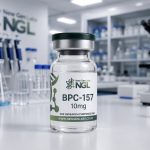
A vial label and a purity percentage are not enough to establish sourcing confidence. Effective research peptide supplier review criteria should show whether a product can be traced from the listed compound and lot number to relevant analytical documentation, appropriate handling information, and a supplier accountable for what it sells. For research-use-only materials, that standard is central to procurement discipline.
This is not a matter of finding the lowest advertised price. A lower price can reflect larger production volume or a simpler sales model, but it can also reflect missing verification, incomplete records, or inadequate packaging. The useful question is whether the supplier provides evidence that allows a scientifically literate buyer to assess the material before it enters a research workflow.
Start With the Product Identity
A supplier should identify the compound clearly and consistently across the product page, vial label, certificate of analysis, and packing documentation. Review the peptide name, stated amount, lot or batch number, and physical format. A listing for a 10 mg lyophilized powder should not leave the buyer guessing whether the amount refers to total vial content, peptide mass, or an unspecified preparation.
Naming also deserves attention. Research compounds may have common names, development names, or peptide sequence descriptions. The supplier should avoid presenting interchangeable terms as though they are automatically identical. Where a molecular formula, molecular weight, or sequence is provided, it should be plausible for the stated material and align with the associated COA.
For lyophilized powders, useful product information includes the stated storage conditions, whether the material requires protection from light or moisture, and handling guidance appropriate to laboratory use. Instructions should remain within a research context. A credible supplier does not use product listings to imply human consumption, diagnosis, treatment, or performance outcomes.
Evaluate COAs Beyond the Headline Purity Number
A COA is a core document, but its value depends on what it actually reports. “COA available” is stronger than a generic assurance, yet buyers should still read the document rather than treating its presence as a final verdict.
First, confirm that the lot number on the COA matches the product lot. A certificate without a lot identifier, or one that is reused across apparently unrelated stock, offers limited traceability. The tested material should be identifiable, and the report should include a date, analytical results, and the laboratory or responsible testing entity.
Next, examine the test method. For peptides, high-performance liquid chromatography is commonly used to assess chromatographic purity, while mass spectrometry can support identity confirmation. The precise combination of methods may vary by compound and testing objective. The practical point is that the supplier should state enough for the buyer to understand what was measured, rather than relying only on a broad claim such as “tested for purity.”
Purity is not identity, and identity is not a complete quality profile. A favorable chromatogram alone does not answer every question about composition, residuals, microbial considerations, or material handling. The relevance of additional testing depends on the research application, product format, intended analytical work, and the buyer’s own laboratory controls. For that reason, a COA should be considered one documented component of a wider supplier assessment.
Ask Whether Documentation Is Specific and Current
Documentation should be legible, product-specific, and reasonably current for the lot being sold. Look for matching compound names, clear units, acceptance criteria where applicable, and results that are not obscured by vague labels. If a certificate appears heavily edited, lacks testing context, or contains mismatched dates and identifiers, pause procurement until the discrepancy is clarified.
Third-party testing can add useful independence, particularly when the supplier identifies the testing laboratory or provides a report format that supports verification. However, “third-party tested” should not be treated as a substitute for reviewing the actual lot documentation. The claim is meaningful when it connects to evidence.
Review Traceability, Packaging, and Fulfillment Controls
The best research peptide supplier review criteria extend beyond laboratory analytics. Material can be correctly identified at release and still arrive in poor condition if order fulfillment is careless. Review how the supplier describes vial labeling, protective packaging, shipment processing, and storage expectations.
A clearly labeled vial reduces preventable handling errors. At a minimum, the label should allow the recipient to identify the compound, strength or stated content, and lot number. Packaging should protect lyophilized material from avoidable physical damage and should be appropriate to the stated handling requirements. For temperature-sensitive products, the supplier should communicate its shipping approach plainly rather than making unsupported guarantees.
Fulfillment policies also reveal whether a retailer has considered real procurement conditions. Check whether order confirmation, shipment notifications, delivery timeframes, damaged-item procedures, and returns or resolution policies are stated in accessible language. Research products may have restrictions on returns once shipped or opened. That can be reasonable, provided the policy is clear before checkout and distinguishes between buyer error and supplier fulfillment error.
Assess the Supplier’s Operating Transparency
A credible supplier makes it possible to determine who is responsible for the transaction. The site should provide clear business contact information, customer support channels, policy pages, and a secure checkout process. Account tools, order records, and straightforward payment confirmation are practical signs of a functioning retail operation, not merely cosmetic features.
Review the supplier’s research-use-only language as well. Responsible positioning is specific: products are supplied for laboratory research and analytical purposes, with no claims for human or veterinary administration. Age-gating and policy disclosures are not proof of analytical quality by themselves, but they indicate whether the business understands the controlled nature of the category.
For buyers sourcing repeatedly, consistency matters. Can the supplier provide lot-linked documentation across different products? Are COAs presented in a repeatable format? Does the product catalog distinguish peptides, reagents, and supporting supplies rather than grouping unrelated materials under imprecise marketing labels? Operational consistency makes future purchasing and recordkeeping easier.
Compare Value Without Reducing the Decision to Price
Price comparisons only become useful after the products are comparable. Compare stated mass, format, lot-specific documentation, testing detail, packaging, and shipping terms. A 5 mg vial with accessible testing documentation is not directly comparable to a similarly named listing with no batch record or unclear product content.
It also depends on the role of the material in the research workflow. A preliminary method-development project may require a different procurement threshold than work where repeatability, documentation, and internal records carry greater weight. Buyers should set their own acceptance criteria before ordering, including what documentation is required, how materials will be received, and which discrepancies require the lot to be quarantined or rejected.
New Gen Labs reflects this quality-led approach by placing emphasis on third-party laboratory testing, COA availability, trusted manufacturing, and research-only product positioning. Those signals are most useful when purchasers verify them against the specific material and lot they intend to order.
A Practical Review Sequence Before Checkout
Before purchasing, confirm the exact compound, stated amount, and format. Then review the available COA for lot matching, identity support, test method, and reported purity. Check storage and handling information, inspect the supplier’s shipping and resolution policies, and ensure the checkout environment and business details are clear.
After delivery, preserve the vial label, packing record, COA, and order confirmation together. Record the received lot number before beginning any laboratory handling. This small step supports internal traceability and prevents documentation from becoming separated from the material it describes.
A dependable supplier relationship is built through evidence that remains usable after the order is placed. When documentation, labeling, handling information, and fulfillment controls align, buyers can make a more defensible sourcing decision and keep their research records organized from receipt onward.