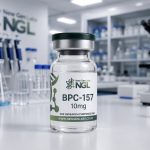
A peptide vial can look straightforward: a labeled container, a stated mass, and a lyophilized powder. The handling decisions behind that vial are less straightforward. A reliable peptide handling checklist creates a documented chain from receipt through preparation and use, reducing avoidable uncertainty around identity, condition, storage history, and traceability.
For research products, handling begins before a container is opened. Product quality is not confirmed by appearance alone. It is supported by batch-specific documentation, controlled storage, clean preparation practices, and records that allow a researcher to understand exactly what was used and when.
Why a peptide handling checklist matters
Research peptides can be sensitive to environmental conditions, repeated handling, contamination, and recordkeeping failures. A missing lot number or an unlabeled prepared solution may not appear significant at the time, but it can make later results difficult to interpret or reproduce.
The checklist is not a substitute for a laboratory’s approved procedures, chemical hygiene plan, or the supplier’s product-specific instructions. It is a practical control point. Its purpose is to ensure the basic questions have answers before material enters a research workflow: Is this the correct compound? Is the documentation present? Has it been stored as specified? Can its use be traced to a batch and preparation record?
This approach also protects purchasing decisions. Third-party testing claims and a COA are useful only when the documentation can be matched to the product and batch received. Traceability should remain intact after delivery, not stop at checkout.
Peptide handling checklist: before opening the vial
Start with verification. Compare the vial label, order record, packing documentation, and available COA. Confirm the compound name, stated quantity, lot or batch number, and expiration or retest information where provided. If a discrepancy exists, quarantine the item from active research use until it is resolved through the supplier.
The most useful pre-use checklist includes the following controls:
- Confirm the product identity, concentration or fill mass, batch number, and container count against the order record.
- Review the batch-specific COA and confirm that the identifying batch information corresponds with the material received.
- Inspect the external packaging and vial for damage, compromised seals, unusual residue, or labeling that cannot be read clearly.
- Record the date received, the person accepting the material, and the storage location assigned to it.
- Check the supplier’s handling and storage guidance before moving the vial to a refrigerator, freezer, or other controlled environment.
- Verify that the material is designated for research use only and is being managed within the laboratory’s approved research controls.
Visual inspection has limits. Lyophilized material may vary in appearance depending on formulation and fill volume, and appearance does not establish purity or identity. Conversely, damaged packaging or a broken chain of custody is a valid reason to pause. Do not use visual assumptions to override documentation.
Documentation is part of the material record
A COA should be retained with the product record, whether in a controlled digital system or a dedicated laboratory file. At minimum, the record should connect the COA, purchase record, vial label, lot number, receipt date, and storage location.
Where a COA reports analytical methods or purity results, review it in the context of the stated batch. It should not be treated as a generic marketing document. If batch correspondence is unavailable, that gap should be documented and addressed before the material is introduced into a study.
Store according to the product, not a generic rule
There is no single storage instruction that applies to every research peptide. Stability can depend on peptide sequence, formulation, physical state, intended storage duration, container closure, and the supplier’s validated guidance. The correct rule is specific: follow the product documentation for the exact item and batch in hand.
For lyophilized powders, keep containers in the specified controlled environment and avoid unnecessary removal. Repeated warming and cooling can introduce avoidable variation. When a vial must be accessed, limit the time outside its designated storage condition and return it promptly after the required work is complete.
Storage records should show where the vial is located, who has access, and when it was moved. This matters in shared facilities, where a vial can otherwise be misplaced, exposed to an unknown temperature excursion, or confused with a similar product.
Label storage positions clearly enough that another trained team member can locate the correct material without relying on memory. Separate incoming or quarantined stock from verified research inventory. A simple status label such as “received,” “released,” “in use,” or “do not use” can prevent an administrative issue from becoming an experimental one.
Prepare a controlled workspace for reconstitution
Reconstitution should be approached as a documented laboratory preparation activity, not as an informal step between experiments. Before handling a lyophilized peptide, confirm the appropriate diluent, target concentration, container compatibility, and preparation conditions through the supplier’s instructions and the laboratory’s established procedures.
Use clean, suitable equipment and a workspace appropriate to the risk assessment for the material. Personal protective equipment, cleaning requirements, and containment practices should follow site procedures. Do not rely on a peptide’s small vial size as an indication that standard laboratory controls can be skipped.
The key concern is consistency. Record the date and time of preparation, the source vial and batch number, the diluent used, the prepared concentration, the preparer’s initials, and the assigned storage conditions. If the preparation is transferred to another container, the new container must carry enough information to preserve that link.
Avoid creating unlabeled “temporary” tubes. In practice, temporary labels often become permanent ambiguities. A prepared solution should be identifiable even if it is found later by someone who did not perform the work.
Minimize avoidable handling variation
Aliquoting may be appropriate when repeated access to a prepared solution would otherwise create unnecessary handling cycles. Whether it is appropriate depends on the product, the planned research schedule, available validated storage information, and the laboratory’s procedures.
The trade-off is clear: more aliquots can reduce repeated access to one primary container, but they also create more labeled units to track. Choose the approach that preserves traceability and matches the validated handling plan, rather than adopting a universal practice.
Maintain chain of custody during research use
Once a peptide enters active use, the material record should continue. Document who removed it from storage, the date, the study or internal project identifier, and any remaining quantity or status where your system requires it. If observations suggest contamination, a labeling error, an unexpected storage event, or material degradation, stop use and isolate the affected item pending review.
This level of documentation supports reproducibility. It also helps distinguish a research result from a materials-management issue. When results are inconsistent, a clear record can show whether the batch, preparation date, storage history, or handling sequence may have contributed.
For multi-user laboratories, define ownership. One person or role should be responsible for updating the inventory status and closing out material records. Shared responsibility often means no responsibility when labels fade, stock changes hands, or a prepared container reaches the end of its approved holding period.
Know when to quarantine or discard
Quarantine is appropriate when the identity, condition, storage history, or documentation of a research product cannot be verified. Examples include a vial with an unreadable label, a container found outside its designated storage area, a preparation with no concentration record, or a COA that cannot be connected to the lot received.
Do not attempt to correct an uncertain record from memory. Mark the material clearly, remove it from active inventory, and follow laboratory procedures for investigation, return, or disposal. Disposal must follow the site’s chemical waste and safety requirements, not household waste practices.
A clear quarantine process protects both valid inventory and research integrity. It is better to document a material as unavailable than to allow an uncertain vial to enter a study because it appears usable.
Build the checklist into routine purchasing
The strongest handling systems begin with sourcing. Select research products from suppliers that provide clear product identification, accessible COAs, defined research-use-only positioning, and documented quality controls. At New Gen Labs, third-party testing and COA availability are central purchasing signals, but receiving verification remains essential once material arrives at the laboratory.
Keep the checklist near the point of receipt and preparation, not buried in a policy folder. A one-page controlled form or digital intake record is often enough when it captures the information that matters: product, batch, COA, condition, storage assignment, preparation record, and final status.
Careful peptide handling is not paperwork for its own sake. It is the practical discipline that keeps a labeled vial connected to defensible research decisions long after the original shipment has been unpacked.